
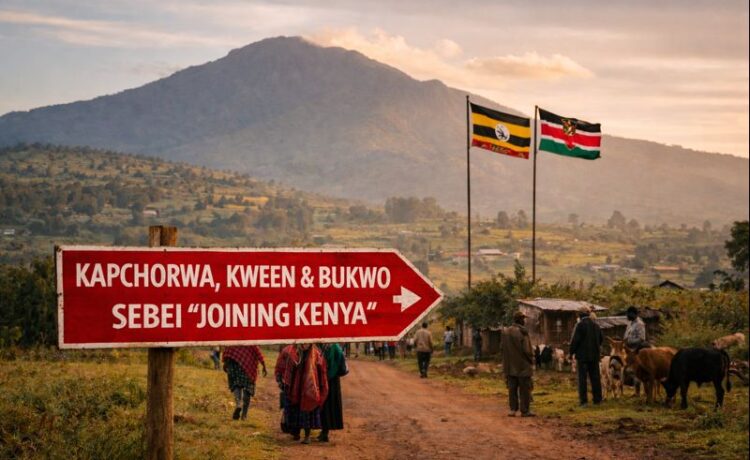
Community survey findings explain frustration, exclusion, and regional identity in Sebei
The Voices of Sebei community survey revealed a finding that has generated significant attention: 69% of respondents indicated that, if given the option, they would prefer to join Kenya.
This statement has often been misunderstood. It is therefore important to clarify what community members mean when they express this view — and what they do not mean.
A Practical, Geographic Understanding
For many respondents, “joining Kenya” is not an abstract political or ideological position. It reflects a practical and geographic interpretation of borders and administration based on daily lived experiences.
In simple terms, respondents described a scenario in which Bulambuli would become the Ugandan border district, while Kapchorwa, Kween, and Bukwo would fall under Kenyan administration.
This understanding is shaped by comparisons people make in their everyday lives — particularly around:
- Security and protection of civilians
- Disaster response and emergency support
- Roads, markets, and access to services
- Treatment by authorities and security agencies
The sentiment is therefore comparative, grounded in experience rather than political doctrine.
A Signal of Frustration, Not Rejection of Identity
Importantly, the same survey shows that Sebei identity remains strong. Nearly half of respondents expressed pride in being Sebei, and many believe that unity and fair treatment within Uganda can still resolve the region’s challenges.
The preference expressed by many respondents should be understood as a radical expression of frustration, not a rejection of national belonging. It reflects the depth of exclusion felt by communities who believe they have been consistently overlooked.
The Broader Context Behind the Sentiment
The Voices of Sebei survey documents a region facing multiple, overlapping pressures:
- Persistent insecurity, particularly around Mount Elgon
- Weak disaster preparedness and emergency response
- Land disputes affecting livelihoods and food security
- Unreliable access to basic services
- Low trust in governance, accountability, and citizen participation
At the same time, communities continue to demonstrate resilience, pride, and hope despite these challenges.
What the Voices of Sebei Are Really Saying
The survey’s overall conclusion is clear:
Sebei is not lacking in commitment, resilience, or willingness to contribute to national development. What communities are demanding is safety, dignity, fairness, and equal treatment.
When people feel unheard for long periods, frustration is often expressed in extreme terms. The “joining Kenya” sentiment should therefore be read as a warning sign of deep marginalization, not a political demand for separation.
A Call for Responsible and Inclusive Action
Restoring trust and stability in the Sebei sub-region requires visible and sustained action, including:
- Improved civilian security and protection
- Effective disaster preparedness and response
- Fair and transparent land justice mechanisms
- Reliable service delivery
- Inclusive governance that genuinely listens to community voices
When communities are protected and treated equally, trust can be rebuilt. When they are not, frustration hardens.
The voices from Sebei are clear. They are asking to be seen, heard, and treated fairly.
The analysis presented here is based on evidence from the Voices of Sebei community survey conducted by Sebei National Youth Movement.
Access the full survey report Here:
