
Voices That Echo, But Are Never Answered
Too County’s youth are living with a weight that is rarely spoken about, yet deeply felt. Across the parishes, young people grow up knowing struggle before they know opportunity. Their lives are shaped by neglect, betrayal, and silence from leaders who were elected to protect them.
Youth in Too County are not just poor—they are ignored. Promises are made during election seasons, faces appear briefly, hands are shaken, and hope is planted. Once the votes are counted, that hope is abandoned. Years pass without follow-up, without accountability, and without change. What remains is a generation left to survive on its own.
UWA Conflicts and the Loss of Youth Livelihoods
Conflicts involving the Uganda Wildlife Authority (UWA) continue to tear at the foundation of youth survival in Too County. Land that once fed families and sustained livelihoods has become restricted and contested, leaving young people landless and powerless.
For many youth, conservation has meant eviction without dialogue and enforcement without mercy. There is little consultation, no meaningful compensation, and no alternatives provided. Young people watch their source of survival disappear while having no voice in decisions that shape their future.
This loss of land has pushed many youth into desperation, forcing them to search for dangerous and illegal ways to survive.
Natural Disasters, Death, and Government Silence
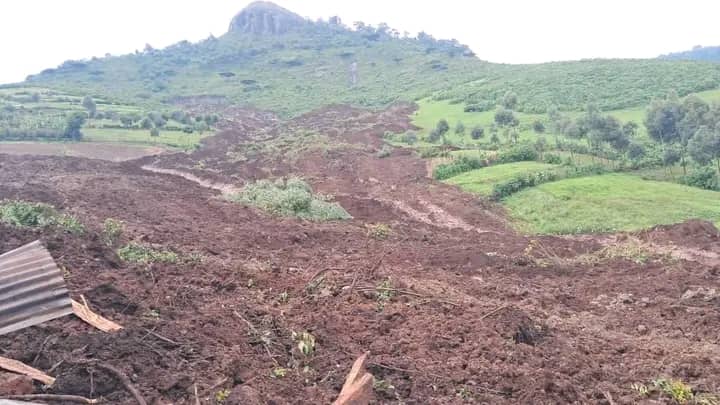
The County’s youth are also living on the frontlines of recurring natural disasters—particularly mudslides and landslips that strike without warning. When the rains come, fear spreads quickly across communities. Hills collapse, homes are buried, gardens are destroyed, and lives are lost.
Young people are often the first responders, digging through mud with bare hands to rescue neighbors, recover bodies, and salvage what little remains. Many witness death for the first time not in hospitals or protected spaces, but in their own homes and villages. The trauma stays with them long after the mud dries.
What deepens the pain is the slow and inadequate government response. Help arrives late, if at all. Emergency support is minimal, and follow-up is almost nonexistent. Families that lose loved ones receive no counseling. Those who lose homes and land receive no compensation. Property destroyed by disasters is treated as a personal misfortune rather than a national responsibility.
The silence after tragedy hurts as much as the disaster itself. No accountability. compensation never happens. No long-term support. A serious another reminder to Too County’s youth that even in moments of death and loss, they are expected to endure alone.
Smuggling, Risk, and Abuse by Enforcement Authorities
With no jobs, no land, and no support, some youth in Too County have turned to cross-border smuggling to make ends meet. This is not driven by greed, but by hunger and abandonment.
These young people risk their lives daily. Accidents are common—bikes crash, bodies are broken, and some never return home. Others suffer arrests, beatings, and loss of goods during encounters with enforcement authorities, including URA officials. Entire savings are confiscated in moments, leaving youth worse off than before.
This pain is rarely acknowledged. Youth carry injuries, trauma, and criminal labels, while the systems that pushed them into smuggling remain untouched.
Low Education Levels and Futures Cut Short
Education remains out of reach for many youth in Too County. Poverty, insecurity, early responsibilities, and broken school systems force young people out of classrooms long before they are ready.
Low education locks youth out of employment, training, and leadership. Without skills or certificates, they are excluded from formal opportunities and condemned to informal survival.
This is not failure—it is abandonment.
Teenage Pregnancies and Stolen Childhoods
Teenage pregnancy continues to tear through families and futures in Too County. Young girls become mothers while still children, often due to poverty, lack of guidance, unsafe environments, and limited access to reproductive health services.
These pregnancies end education, deepen poverty, and trap young women in lifelong hardship. Young men are equally unprepared, pushed into survival without skills, income, or direction.
Behind every teenage pregnancy is a child whose future was quietly taken away.
Bakot Cattle Raids and Constant Fear
Bakot cattle raids remain a source of fear and trauma for youth in parts of Too County. Night attacks, loss of livestock, and displacement are common experiences.
Cattle represent food, school fees, and survival. When raids occur, youth lose more than animals—they lose stability. Many are forced to abandon school to guard livestock or migrate in search of safety, carrying trauma that follows them into adulthood.
Corruption, Nepotism, and Closed Doors
Corruption has crushed hope among Too County’s youth. Jobs are not given on merit, but on connections, family ties, and favoritism. Nepotism dominates recruitment processes, leaving qualified youth locked out and humiliated.
Public opportunities are treated as private property. Youth without “people” in power are ignored, no matter their qualifications or commitment. This reality has convinced many that honesty, education, and participation no longer matter.
Leaders Who Appear Only During Elections
Perhaps the deepest pain for Too County’s youth is political betrayal. Leaders are visible during campaigns—making promises, attending meetings, and speaking of change. Once elections pass, they disappear.
Years go by without visits, without listening, and without accountability. Youth are remembered only when the next election approaches. This cycle has destroyed trust and left young people feeling used, discarded, and voiceless.
Poor Roads and Deep Isolation
Apart from the Suam–Kapchorwa road, Too County’s road network is in a state of collapse. Internal roads are impassable, cutting off communities from markets, schools, and health services.
Poor roads isolate youth physically and economically. Produce rots, opportunities disappear, and mobility becomes impossible. Isolation reinforces the sense that Too County—and its youth—have been forgotten.
The Sebei National Youth Movement raises Too County as a symbol of youth abandonment that can no longer be ignored.
Youth need land security, education, jobs, safe livelihoods, functioning roads, and leaders who remain present beyond elections. Corruption must be confronted, not normalized. Youth suffering must be acknowledged, not silenced.
Too County’s youth are not criminals.
They are not lazy.
They are surviving in a system that abandoned them.
Their pain is heavy.
Their voices are real.
And their future must no longer be postponed.
